COMMERCIAL ASPHALT PAVING · SOUTHWEST FLORIDA
Commercial Asphalt Paving in Southwest Florida.
Full-depth paving. Built for SWFL traffic loads.
Commercial asphalt paving, resurfacing, and mill-and-fill for HOA communities, retail centers, medical complexes, office parks, and industrial properties across SWFL. Specified thickness. Proper drainage. Built for SWFL traffic loads.
LICENSED CBC 1266325 · SPECIFIED THICKNESS · 17+ YEARS · 24/7 ANSWERING

REQUEST A QUOTE
Tell us about your project.
Fill out the form and we'll respond within 24 hours. For urgent quotes or questions, call us 24/7 at (239) 946-5398.
- Licensed CBC 1266325
- Fully insured and bonded
- Family operated since 2007
- Workmanship warranty on every project
- Free site visit included with every quote
PREFER TO TALK?
(239) 946-5398Call or text. 24/7 answering service. Average response time under 2 hours during business hours.
EMAIL US
quote@floridasealcoatstriping.comBest for project details, drawings, or HOA board questions.
Request a paving quote
THE CASE FOR DOING IT RIGHT
Trusted by SWFL property managers since 2007. Commercial asphalt paving done right.
Two parking lots paved identically can last 7 years or 25 years. The difference isn't the asphalt mix. It's sub-base preparation, drainage planning, thickness specification for actual traffic loads, and cure-time discipline. Property managers who hire on price alone find this out the hard way. After 17 years paving commercial properties across SWFL, we know what separates contractors who care about the work from the ones who don't.
Cheap Paving That Fails Early
What you get from contractors competing on price alone
Skipped Sub-Base Preparation
Florida's sandy soils require careful sub-base preparation. Skipping proper compaction or using insufficient crushed stone base creates soft spots that the asphalt will telegraph within 2 to 3 years. Sub-base failure shows up as alligator cracking, settlement, and potholes — and the only fix is full-depth replacement. The contractor who skipped this step won the bid on price.
Wrong Thickness Specification
Asphalt thickness must match actual traffic loads. Standard residential thickness under garbage truck routes, delivery vehicles, or industrial equipment will fail in 3 to 5 years. Most contractors quote the minimum thickness to win the bid. This guarantees premature failure. The property manager pays once when the bid is accepted. They pay again when the lot fails.
Drainage Ignored
SWFL summer rain demands proper grading. Standing water on asphalt accelerates oxidation, infiltrates the asphalt structure, and shortens pavement life by 5 to 10 years. Properties with drainage issues need grade correction before paving — not just resurfacing over the existing problem. The contractor who didn't ask about drainage is the one who'll never come back to fix it.
Paving Done Right By FSS
What 17 years of trusted SWFL paving looks like
Proper Sub-Base Preparation
Site evaluation before quoting includes sub-base assessment. Soft spots identified and corrected with crushed stone base. Proper compaction verified before any asphalt installation. Sub-base graded for drainage. This prevents the failure modes that cheap paving guarantees. We've been doing this same standard for 17 years across SWFL.
Traffic-Load Thickness Specification
Asphalt thickness specified based on actual traffic loads. Vehicle types, daily count, axle weights all factored in. HOA community roads, retail outparcels, industrial yards, and medical complex parking all get different specifications. Heavier loads get thicker asphalt. This is why our specified thickness costs more upfront but saves 5 to 10 years of pavement life.
Drainage Built Into Every Project
Drainage grading planned before paving begins. Grade corrections included where SWFL standing water is causing pavement degradation. Properly sloped paving directs water to drains and away from structures. Drainage is the single biggest factor in long-term pavement performance — and the one we never skip.
DECISION FRAMEWORK
Repair, resurface, or repave?
The wrong choice costs 2 to 3 times what it should. Property managers who patch when they should repave end up paying for both. This framework matches your property's condition to the right approach.
What's the current surface condition?
PAVING APPROACHES
Three approaches. Different costs. Different lifespans.
Understanding the difference helps property managers budget correctly and avoid the expensive mistake of choosing the wrong approach.
Resurfacing (Overlay)
Relative cost
Best for:
- Surface damage with structurally sound base
- Asphalt over 10 to 15 years old in fair condition
- Properties needing cosmetic and protective refresh
- Phased budget approach (lower upfront cost)
What it includes:
- Surface preparation (cleaning, leveling, tack coat)
- 1 to 2 inches of fresh asphalt overlay
- Edge feathering and grade matching
- Final compaction and finishing
- New striping and ADA refresh
Lifespan estimate
8 to 12 years
Mill and Fill
Relative cost
Best for:
- Surface and partial structural damage
- Properties with elevation/clearance constraints
- Targeted repair of damaged sections
- Mid-life asphalt requiring intervention
What it includes:
- Milling (removal) of top layer of damaged asphalt
- Tack coat application to remaining base
- Fresh asphalt installation at 2 inch thickness
- Re-leveled to original elevations
- Drainage maintained
Lifespan estimate
10 to 15 years
Full Repave
Relative cost
Best for:
- Structural failure of asphalt base
- Major settling, drainage failure, alligator cracking
- Asphalt at end of serviceable life
- Properties planning to keep ownership 10+ years
What it includes:
- Demolition of existing failed asphalt
- Sub-base evaluation and correction
- New aggregate base if required
- Specified-thickness asphalt installation
- Multiple compaction passes
- New striping and ADA full layout
Lifespan estimate
20 to 25+ years
Quote-to-completion timeline runs 4 to 8 weeks for most commercial paving projects. Site evaluation and specification review at the front end. Permit timing varies by city. We coordinate with property management throughout the entire process.
OUR PROCESS
Six steps. Every paving project.
From site walk to final inspection. Specification documentation at every step.
Site evaluation and specification.
Walk the property with you. Evaluate existing asphalt condition. Take core samples where conditions warrant. Identify drainage issues. Specify the right paving approach. Written assessment delivered before quoting — including thickness recommendation, sub-base condition, and drainage notes.
Demolition and removal.
Demolish existing failed pavement. Use milling machines for partial removal or full-depth excavation for complete replacement. Remove old material from site. Clean and inspect sub-base before any new work begins.
Sub-base preparation.
Inspect and compact sub-base. Address soft spots with crushed stone base. Verify proper drainage grading. Confirm density meets specifications. Sub-base preparation is the single most important step for long-term pavement performance.
Asphalt installation.
Hot-mix asphalt placed at specified thickness using paving machines. Multiple lifts compacted per specifications. Edge work and transitions to adjacent surfaces. Tie-in to existing pavement where applicable.
Compaction and finishing.
Multiple compaction passes with steel and rubber-tire rollers. Final surface verified for grade, smoothness, and proper drainage flow. All edges sealed. Surface tested for density and uniformity.
Final inspection and warranty.
Final walk with property manager. Photo documentation of completed work. Warranty paperwork delivered (workmanship terms, material warranties). Recommendations for initial sealcoating (typically 6 to 12 months after paving). Site cleanup verified.
PAVING ACROSS SWFL
Six cities. One standard.
The same paving standard applied identically across every SWFL city we serve.
CAPE CORAL
From Pine Island Road to the Yacht Club.
Paving in CAPE CORAL →
FORT MYERS
From the River District to Edison Mall.
Paving in FORT MYERS →
NAPLES
From 5th Avenue South to Vanderbilt Beach.
Paving in NAPLES →
ESTERO
From Coconut Point to Williams Reserve.
Paving in ESTERO →
BONITA SPRINGS
From Bonita Beach Road to Bonita Bay.
Paving in BONITA SPRINGS →
PORT CHARLOTTE
From Charlotte Harbor to Murdock.
Paving in PORT CHARLOTTE →
INDUSTRIES WE COMMONLY SERVE
Any commercial property. Six industries we serve most often.
We pave any commercial property in SWFL — from corporate campuses to corner gas stations, from condominium associations to construction yards. These are the six verticals we serve most often, each with specific paving concerns we've learned to handle over 17 years.
Communities & HOAs
Master-planned community road networks. Significant infrastructure investment. Phased weekend execution to maintain resident access. Capital reserve study coordination critical. Drainage planning integrated with community stormwater systems.
- Proper road thickness for garbage truck, mail truck, school bus loads
- Phased weekend work so residents maintain access
- Coordination with HOA capital reserve studies
- Drainage planning integrated with community stormwater
Retail Centers & Plazas
Plaza outparcels, parking lot reconstructions, outparcel pad installations. High customer traffic with truck delivery routes. Operations continuity is paramount. Tenant communication essential. Asphalt specification calibrated for mixed traffic types.
- Mixed-traffic thickness specification (cars, delivery trucks, garbage)
- Phased work to maintain plaza operations
- Tenant communication packages 4 weeks ahead
- Asphalt cure time aligned with reopening schedules
Medical Facilities & Healthcare
Hospital campus parking. Medical complex reconstructions. Urgent care expansion. ADA compliance critical at design stage. Emergency vehicle access lanes specified for ambulance and fire truck loads. Drainage critical for accessible routes.
- Emergency vehicle lane thickness for fire trucks and ambulances
- ADA accessibility built into design from start
- Drainage critical for accessible route compliance
- Multi-building campus coordination
Office Complexes & Corporate Parks
Corporate park parking lots. Multi-building office complex paving. Reconstruction projects with high tenant coordination needs. Visitor parking sections. Weekend and after-hours execution. Predictable timelines critical for property management.
- Multi-tenant coordination through property management
- Weekend and after-hours scheduling
- Phased section work to maintain employee parking
- Visitor parking and reserved space integration
Industrial Parks & Distribution
Warehouse access roads. Distribution center parking. Heavy truck routing yards. Loading dock approach paving. Industrial sites demand proper thickness specification for actual equipment loads — not residential specs. Drainage critical for high-traffic surface integrity.
- Heavy-truck thickness specification (5 to 8 inch specs typical)
- Loading dock approach paving with proper grade specification
- Industrial yard lay-down area specification
- Drainage planned around equipment traffic patterns
Religious & Educational Facilities
Church parking lots. School parking and bus lanes. Daycare drop-off zones. Community center lots. Service-time coordination critical. School-hour avoidance for educational facilities. Summer break scheduling for schools.
- School bus lane thickness specification
- Summer break scheduling for educational facilities
- Service-time coordination for religious facilities
- Drop-off and pick-up zone specification
DON'T SEE YOUR INDUSTRY?
We pave any commercial property in SWFL.
Restaurants, gas stations, auto dealerships, self-storage facilities, government buildings, mobile home parks, marinas — if it has commercial asphalt that needs paving or resurfacing, we handle it. The six industries above are where we have the most experience, but the same standard applies to every project we take.
Get a quote for your property →RECENT PAVING WORK
Paving across Southwest Florida.
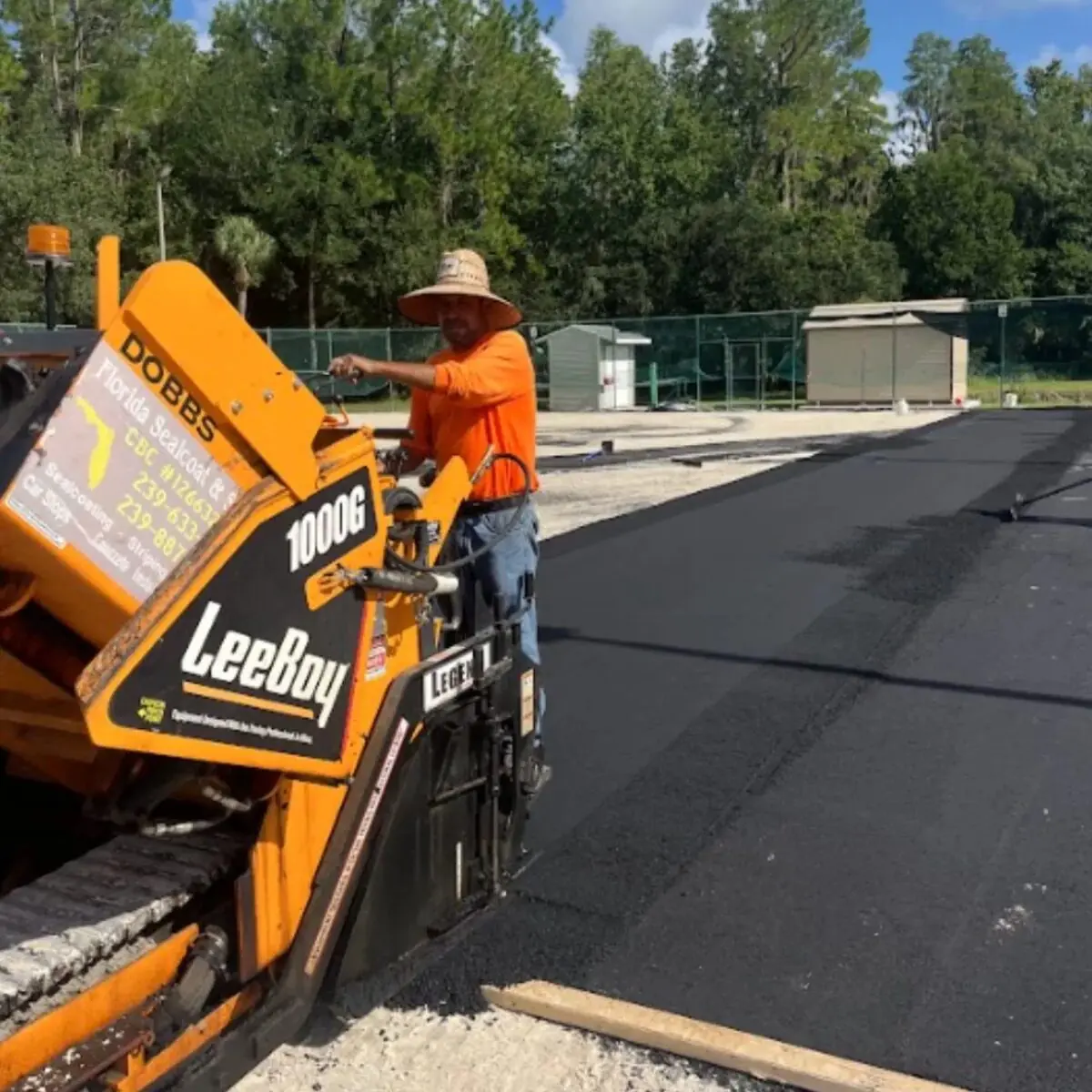 COMMERCIAL · PAVING
SWFL · PAVING
Commercial asphalt paving with a fresh full-depth surface laid by our paving crew.
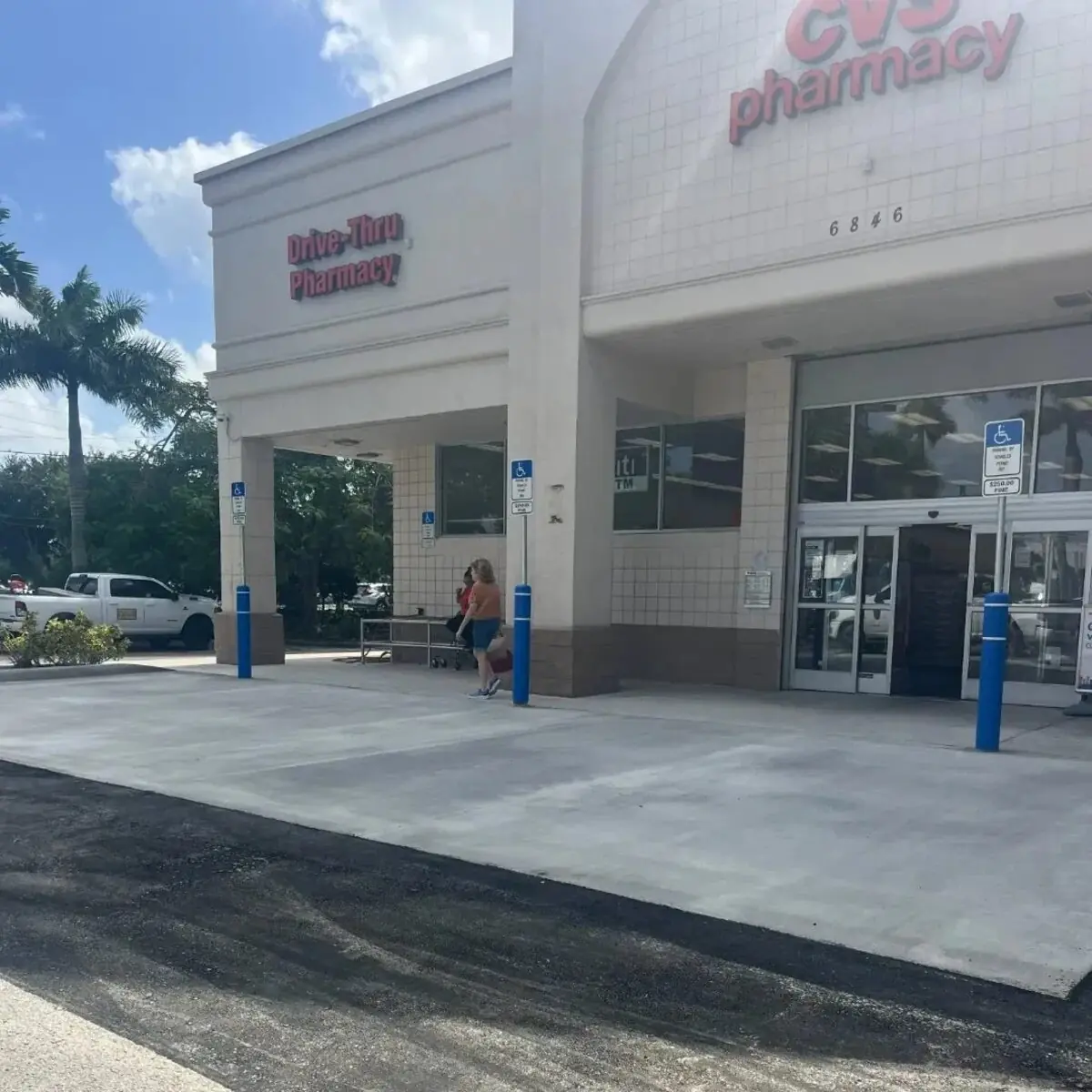 RETAIL PHARMACY · PAVING
SWFL · PAVING
Retail pharmacy asphalt paving and surface repair at a CVS Pharmacy location, completed with minimal disruption to store access.
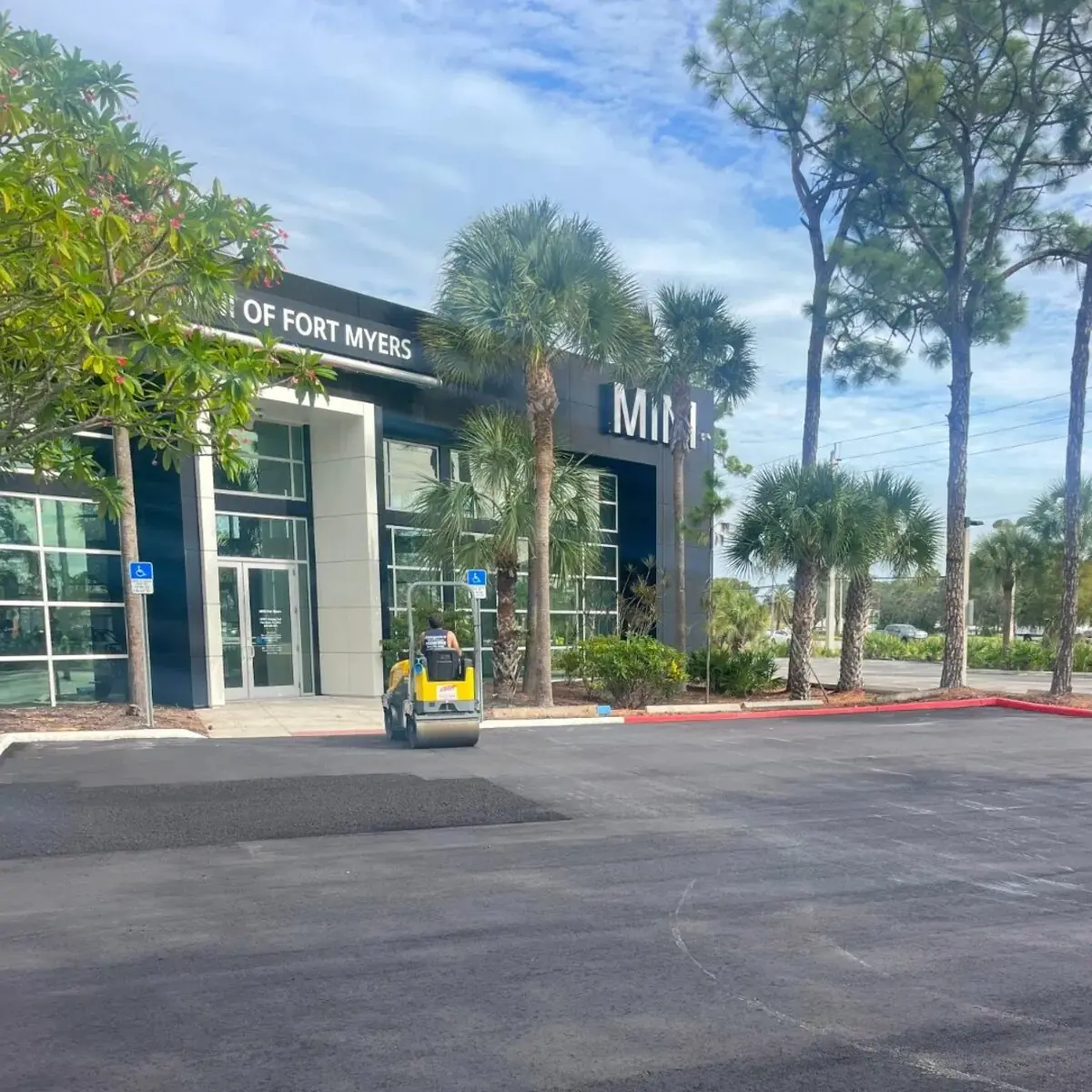 AUTO DEALERSHIP · PAVING
FORT MYERS, FL · PAVING
Auto dealership asphalt paving with a roller compacting a fresh surface at MINI of Fort Myers.
Highly recommend. As a business owner myself they provided professional service with constant communication to upgrade our parking lot for our property.
Justin Green, Business Owner
PAVING FAQ
What property managers ask about commercial paving.
READY TO START?
Get your paving quote.
24/7 quote requests. Site evaluation included.
Or call us 24/7: (239) 946-5398